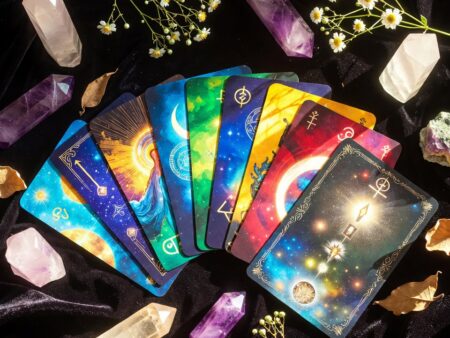
Tarot cards have been used for centuries as a tool for self-reflection, insight, and understanding life’s complex situations. Despite the mystical image often associated with Tarot, in practice the cards work as a symbolic language—helping people explore emotions, patterns, and possible directions rather than predicting a fixed future.
Today, Tarot is widely used both by professional readers and individuals seeking clarity, guidance, and personal growth.
What Are Tarot Cards?
A traditional Tarot deck consists of 78 cards, divided into two main groups:
Major Arcana (22 cards)
The Major Arcana represent major life themes, archetypes, and transformative experiences. These cards often point to significant lessons or turning points rather than everyday events.
Examples include The Fool, The Lovers, Death, The Wheel of Fortune, and The World.
Minor Arcana (56 cards)
The Minor Arcana focus on daily life, emotions, challenges, and actions. They are divided into four suits:
- Wands – energy, ambition, action
- Cups – emotions, relationships, feelings
- Swords – thoughts, conflict, decisions
- Pentacles – money, work, stability
Each suit includes numbered cards and court cards (Page, Knight, Queen, King).
How Tarot Cards Work
Tarot cards do not function as literal fortune-telling tools. Instead, they reflect:
- The current state of a situation
- Emotional or mental influences
- Hidden factors or perspectives
- Possible outcomes based on present energy
Tarot works through symbols and intuition. When a question is asked and cards are drawn, the images and meanings help the reader connect internal thoughts and feelings with the external situation. This process often brings clarity that logic alone cannot provide.
How to Use Tarot Cards Step by Step
1. Ask a Clear Question
Tarot works best with open-ended questions rather than yes/no ones.
For example:
- “What should I understand about this situation?”
- “What lesson is this relationship teaching me?”
- “What energy surrounds my current career path?”
The clearer the question, the more useful the reading.
2. Choose a Tarot Spread
A spread is the layout of the cards. Beginners often start with simple spreads, such as:
- One-card draw for guidance or focus
- Three-card spread (past, present, future)
- Situation – challenge – advice
More complex spreads can be explored with experience or professional guidance.
3. Interpret the Cards
When reading Tarot, consider:
- The traditional meaning of the card
- Its position in the spread
- How it interacts with other cards
- Your intuitive reaction to the imagery
Tarot interpretation is not rigid. Personal insight often matters as much as textbook definitions.
4. Reflect, Don’t Rush
Some Tarot messages make sense immediately, while others reveal meaning over time. Journaling your readings can help track insights and patterns.
What Tarot Can Reveal
Love and Relationships
Tarot is commonly used to explore emotional dynamics, communication issues, expectations, and inner needs within relationships. Rather than telling you what someone will do, the cards highlight emotional patterns and choices.
Career and Finances
In work-related questions, Tarot can shed light on motivation, obstacles, opportunities, and emotional attitudes toward money or success. This can be especially helpful during transitions or uncertainty.
Personal Growth
Tarot is a powerful self-reflection tool. It can reveal limiting beliefs, personal strengths, recurring challenges, and areas ready for growth.
Common Tarot Myths
Myth 1: Tarot predicts an unavoidable future
Tarot shows possibilities, not fixed outcomes.
Myth 2: Tarot is dangerous or negative
Tarot itself is neutral. The intention behind its use matters most.
Myth 3: You must be psychic to read Tarot
Anyone can learn Tarot with patience, awareness, and practice.
Reading Tarot Yourself vs Working With a Tarot Reader
Self-readings are useful for reflection, but emotions can sometimes cloud interpretation. Professional Tarot readers offer:
- Neutral perspective
- Experience interpreting complex spreads
- Emotional grounding during difficult situations
Online Tarot readings make this guidance accessible without pressure.
Tarot Readings Online Today
Modern Tarot platforms allow users to:
- Choose readers by specialty and reviews
- Receive readings via chat, phone, or video
- Ask follow-up questions
- Save and reread interpretations
For beginners, online Tarot readings are often the easiest way to explore the cards safely and responsibly.
⭐ Top 5 Tarot Readers
1. PsychicBook
Why it stands out:
PsychicBook is known for its chat-based Tarot readers, who provide clear and thoughtful interpretations of Tarot spreads. Many readers explain the symbolism of each card step by step, making it easier to understand how the message applies to your situation.
Because sessions are text-based, you can reread the insights later, which is especially helpful for reflection and decision-making.
Best for:
Detailed, written Tarot readings and calm, structured guidance.
2. Keen
Why it stands out:
Keen offers a large network of Tarot readers with a wide range of reading styles—from practical to intuitive. Users can filter readers by experience, ratings, and specialties, making it easy to find a match.
Readings are available via chat and phone, giving users flexibility in how they connect.
Best for:
Variety, flexible formats, and finding a Tarot reader that fits your style.
3. Purple Garden
Why it stands out:
Purple Garden is popular for live Tarot readings, including video sessions. Seeing the reader and their card pulls in real time can create a more personal and emotionally engaging experience.
This platform is often chosen by users who value visual connection and intuitive presence.
Best for:
Live video Tarot readings and face-to-face interaction.
4. Kasamba
Why it stands out:
Kasamba specializes in in-depth written Tarot readings. Many Tarot readers on this platform provide longer explanations that explore card combinations, underlying patterns, and emotional context.
These detailed readings are ideal for users who want to reflect on the guidance over time.
Best for:
Deep, text-based Tarot interpretations and symbolic analysis.
5. MysticSense
Why it stands out:
MysticSense offers chat, phone, and video Tarot readings, allowing users to choose the format that feels most comfortable. Advisor profiles include clear descriptions, reviews, and badges that highlight experience and specialties.
Best for:
Flexible communication options and intuitive Tarot guidance.
Quick Comparison of Tarot Reading Platforms
| Platform | Chat | Phone | Video | Best For |
|---|---|---|---|---|
| PsychicBook | ✔️ | ❌ | ❌ | Written, reflective Tarot readings |
| Keen | ✔️ | ✔️ | ❌ | Large selection of Tarot readers |
| Purple Garden | ✔️ | ✔️ | ✔️ | Live video Tarot readings |
| Kasamba | ✔️ | ❌ | ❌ | In-depth written Tarot analysis |
| MysticSense | ✔️ | ✔️ | ✔️ | Flexible reading formats |
Final Thoughts
Tarot is not about magic or fear—it’s about awareness, symbolism, and choice. The cards do not make decisions for you, but they help you see situations more clearly and thoughtfully.
Used with intention, Tarot becomes a supportive tool for reflection, insight, and personal growth—whether you read for yourself or work with an experienced reader.